



Get Firewise
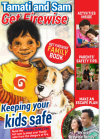
Get Firewise for year 1 and 2 is a sequenced programme of learning experiences designed to give five and six year olds knowledge, attitudes and behaviours that will keep them safe around fire.
Use this space to note any additional information about your escape plan, i.e. who will assist
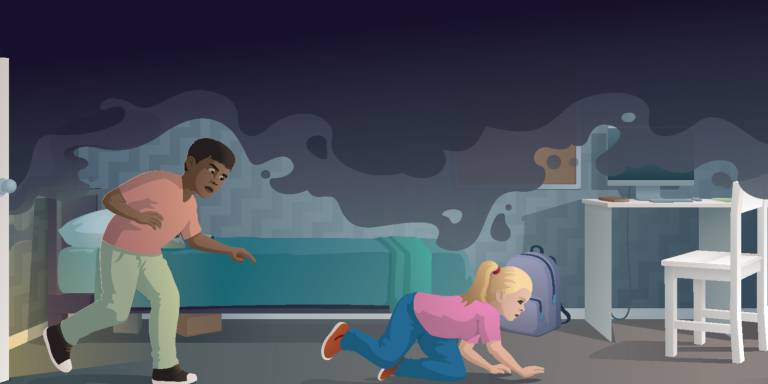
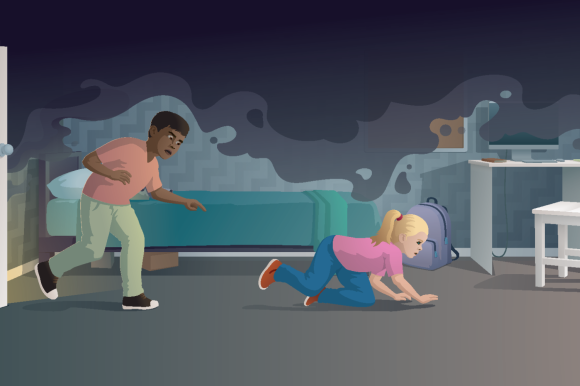
Smoke is poisonous and more deadly than flames.
If you breathe smoke for more than a few breaths it can kill you.
A house fire can kill you in less than three minutes.
Don't spend time trying to save possessions.
A closed door buys you time.
It slows down the spread of fire, giving you more time to get to safety.
People have died by going back into a fire.
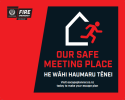
Don't leave the meeting place to go back inside for any reason.



Get Firewise for year 1 and 2 is a sequenced programme of learning experiences designed to give five and six year olds knowledge, attitudes and behaviours that will keep them safe around fire.
On this page
The Get Firewise programme is cross-curricular with a strong literacy focus. It meets the objectives of Te Marautanga o Aotearoa | The New Zealand Curriculum (2008) with additional content updates.
Teachers and schools can sign up for free Get Firewise resources(opens in a new tab) using the form below.
Get Firewise is a flexible programme and can be used as a short term topic using literacy and topic time over two or three weeks. It can also be used as a whole term topic using an inquiry learning approach.
Watch the video for a snapshot view of what our Get Firewise programme offers. From curriculum insights, classroom teaching, a firefighter visit to interactive and fun experiences on a fire station. It can be used as a promotional tool for schools.
Get Firewise is focused on ensuring students:
These outcomes can be identified as achieved through completion of the assessment data and activities provided below.
Teachers may choose to use one or more of these simple activities to assess their class against each outcome. You may choose to use the same or different activities for diagnostic and summative assessment.
The Firewise assessment tool has now been updated. Teachers can complete the diagnostic assessment directly online to capture student knowledge and behaviours before starting the programme.
Complete the assessment activities before you begin, and after completing the programme to show how behaviours of students and families are changing as a result of this programme; specifically, the three fire safety learning outcomes.
Note: we prioritise firefighter visits to schools who have completed the assessments.
Once the diagnostic assessment has been submitted, an automated email will be sent to remind teachers to complete the summative assessment at the end of the programme.
This update reflects teacher feedback and is designed to make the assessment process easier and more efficient.
Useful guides:
Complete the feedback form once you've completed the programme to help us ensure the programme remains current and best meets the needs of teachers, kaiako and students.
There are four sections to the feedback form:
While the Get Firewise programme is designed to be delivered solely by teachers, a visit by firefighters or designated Firewise coordinators can occur near the end, or after the learning programme, assessment and feedback form have been completed.
The firefighter visit is a structured presentation to the class that summarises and reinforces the key learning in theGet Firewise. It is usually about 30-to 45-minutes.
This presentation focuses on:
The firefighter or Firewise coordinator will discuss this presentation with you and can adapt it to meet the identified needs of your class. The presentation is designed around gaining responses from students and should be delivered to one class at a time to be effective. The firefighters will not deliver presentations to groups of classes because the students’ retention of safety behaviours is compromised.
Please note:A firefighter presentation supports, but it is not a substitute for, the learning programme. Students must have completed, or have almost completed,Get Firewise, before a firefighter can visit. Not all locations will have firefighters available, andFirefighters that visit are on duty, this means they may be called away if there is an emergency.
To check the availability and/or arrange for a firefighter or Firewise coordinator to visit your class, please use thecontact form(opens in a new tab).
Home educators can use the Get Firewise and Māui Tinei Ahi (opens in a new tab)programme material in a flexible way, adapting activities to suit learning at home and incorporating them into personalised literacy or inquiry-based learning sessions.
The Get Firewise and Māui Tinei Ahi main page overview is equally valuable for home educators wanting to understand how the programme supports fire safety learning in a home-based environment.
Get Firewise is focused on ensuring students:
These outcomes apply to all learners, including those learning at home, and can be reinforced through everyday routines and home-based activities.
Home educator groups may also request a firefighter visit where available. Visits can be adapted for small-group learning environments, depending on local availability. We also have the Fire Truck Video(opens in a new tab) available.
For all downloadable material view our learning from home resources(opens in a new tab).
Download individual resources below.
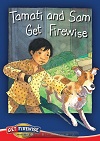
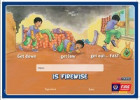
| Tamati and Sam Get Firewise interactive story
An interactive story is an integral component of theGet Firewiseresource. The story reinforces key fire-safety messages. |
|
For Firefighters to use during school visits:
|
Introduction(Firefighter training) |
|
|
Candle fire - Year 1 and 2(for use in schools) |
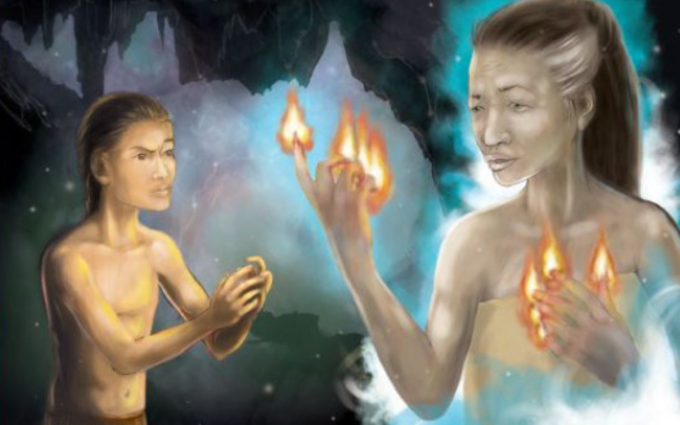
Māui-tinei-ahi is a fire-safety programme for year 1 and 2 students in Māori-medium classrooms. Information online is available in both English and Te reo Māori.

Get Out! Stay Out! is an early childhood education school fire-safety programme for pre-school children aged from two to five years old.
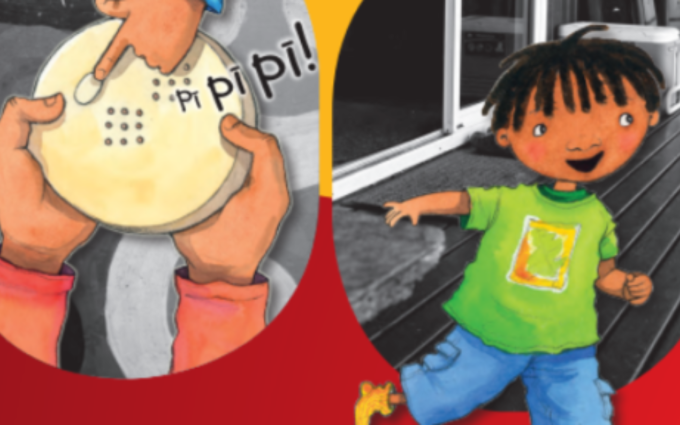
E Puta! E Noho ki Waho! is a fire-safety programme for kōhanga reo and puna akoranga enrolled tamariki. Information online is available in both English and Te reo Māori.